When we read Matthew 28, we flatten the text almost without noticing. We turn it into a line: a starting point, an end point and a command in the middle. Go. From here to there. Go and do. Read that way, mission becomes a task to carry out, a program to complete. But the Great Commission is not a task. It is a movement. And a movement doesn’t fit on a line.
All physical reality exists in three dimensions: length, width and depth. A body has all three. A movement has all three. A line cannot hold a life. Life happens in volume, and it is in volume that we understand the world around us.
Anyone who has put on those glasses to watch a 3D movie knows what I mean. The image jumps off the screen. It seems alive, within reach, and you almost try to grab it. The Great Commission needs to be read that way: as something alive happening right in front of us. Length is only one side of it. We need to live it from every angle.
The Great Commission is a movement in three dimensions: the invitation that pulls us out of our comfort, the encounter that reveals the risen Christ to us, and the sending that launches us to the nations in his authority, here and now.
1. The invitation to meet him: width
It all begins with two women. Mary Magdalene and the other Mary went to the tomb on the morning of the resurrection and found it empty. On their way back, Jesus came to meet them.
“Suddenly Jesus met them. ‘Greetings,’ he said. They came to him, clasped his feet and worshiped him. Then Jesus fsaid to them, ‘Do not be afraid. Go and tell my brothers to go to Galilee; there they will see me.’”11. Matthew 28:9-10, NIV
The first witnesses of the resurrection were two women. In a world that did not accept the testimony of women, God entrusted them with the first announcement of the greatest news in history. The resurrection begins by turning the expected order upside down: the first to proclaim it are the last the world would have chosen.
And the risen Christ’s first command was not “go to the nations.” It was: tell my brothers I will meet them in Galilee. Before the sending, the encounter. Before going, coming. Being with Christ comes before going to the nations. Learning from him, hearing his voice in prayer, walking with him every day: that comes before anything we do for him. Being before doing. Mission is born from presence, not the other way around.
The disciples were locked in a house in Jerusalem, afraid. They had seen what was done to Jesus and knew they could be next. Peter had already denied his Master three times. Jesus could have kept everything secret, behind closed doors. Instead, he called them out, on a long journey across the country to Galilee, to meet him in the place where they had first believed.
And the meeting place was a mountain in Galilee. The article is definite, “the mountain,” as if it were a place they knew. Matthew never names it. Some scholars believe it was the same mountain as the Sermon on the Mount, in Matthew 5. Discipleship began on a mountain in Galilee, and the commission happens on the same one. If so, Jesus was calling the disciples back to the beginning, to the place where it all started, where he first gathered them and taught them about the Kingdom. A return to their first love, their first zeal, their first joy. Three years into the journey, he was closing that circle to open a new chapter.
It is on this mountain that Jesus makes a new declaration, like a new sermon. In Matthew 5, he sets out the ethos of the Kingdom. In Matthew 28, he gives his mission. The same mountain holds both: the character of the Kingdom and the commission of the Kingdom. Ethos before mission. Whoever has not learned to live as a citizen of the Kingdom has nothing to proclaim to the nations.
The journey from Jerusalem to Galilee is the journey between the cross and the crown. We live in that tension. The cross is dying to yourself, denying yourself, taking up your cross every day. The crown is victory, triumph. We often want the authority without the process of discipleship. The message heard most in the church today is the message of the crown. It is true, but on its own it becomes a gospel empty of intimacy, a gospel of spectators. There are no shortcuts on this road. The cross is not a detour on the way to the crown. It is the way.
The call is to take a step of faith. Go to Galilee, to the mountain where God is calling you, because there he will meet you. There you will see his authority. There you will receive God’s vision for your life.
It is at the top of the mountain that we see God’s promise. Like Abraham, when God called him to Mount Moriah, and in that place he saw God’s provision.22. Genesis 22:2, 14 Like Moses before the Promised Land.33. Deuteronomy 34:1-4 God meets his people on mountains, and on mountains he shows what can only be seen from above: the provision, the land, the future.
In Matthew 22, Jesus tells the parable of the wedding banquet. The king invited the guests of honor, but they refused, busy with their farms and their businesses. Some even killed the servants. So the king said those guests were not worthy, and the servants brought in the poor, the destitute. But in the middle of the feast the king saw a man without wedding clothes and had him thrown out. Jesus concluded: “For many are invited, but few are chosen.”44. Matthew 22:14, NIV The invitation to be with Christ is wide. It goes out to many people, but few hear it and accept it. There is a cost to following. Grace invites, but grace also clothes: you have to take off the old and put on the wedding clothes. You will have to leave a lot behind. But it is there, in the place of encounter, that we are equipped.
2. The encounter: depth
The disciples obeyed. They went up to Galilee, to the mountain Jesus had told them to go to. And then Matthew records a sentence that has always struck me:
“Then the eleven disciples went to Galilee, to the mountain where Jesus had told them to go. When they saw him, they worshiped him; but some doubted.”55. Matthew 28:16-17, NIV
The risen Christ stood before them. Some worshiped. Others doubted. How is it possible to doubt in front of the greatest miracle in history?
The doubt here is hesitation. It is a divided mind: should I go, or not? I surrender, but I take it back. I worship, but I hesitate. And it is in that tension that the encounter with Jesus truly happens, because it is personal. Jesus knows your heart. He knows where your doubts are and where your moments of worship are.
Faith is not the absence of doubt. Faith is worship in the presence of doubt. The disciples worshiped and doubted at the same time, before the same Lord, and Jesus did not wait for the doubt to be resolved before calling them. The gospel does not wait for our certainty. It meets us in our hesitation.
And what does Jesus do with those who doubted? He doesn’t rebuke them. He doesn’t separate them from the group. He doesn’t take them off the team. Verse 18 says he came to them. He received both the worship and the doubt. Christ did not push away those who doubted.
Their doubt was not denial; it was wavering. And the commission was given to disciples who wavered. The mission rests on his authority, not on their certainty. God does not require perfection from us. He requires that we be genuine and authentic in our encounter with him. The risen Lord is the subject of the mission; we are the participants. You are not alone in this. Neither am I.
3. The sending: length
It is at the top of the mountain that Jesus makes his proclamation:
“Then Jesus came to them and said, ‘All authority in heaven and on earth has been given to me. Therefore go and make disciples of all nations, baptizing them in the name of the Father and of the Son and of the Holy Spirit, and teaching them to obey everything I have commanded you. And surely I am with you always, to the very end of the age.’”66. Matthew 28:18-20, NIV
At the top of the mountain, the first thing God does is declare who he is. All authority. There is no other name, no other king, no other lord above him. He is the one who was crucified, who rose again, who is seated at the right hand of the Father. The mission belongs to the exalted Lord before it belongs to the church. It doesn’t begin with us. It begins with him. God’s promises rest on his credibility. The mission, the promises and the covenant depend on his work, and his work alone.
On the mountain, Abraham learned that the Lord is provider, Jehovah Jireh.77. Genesis 22:14 Moses went up in Exodus 17 and learned that the Lord is his banner, Jehovah Nissi.88. Exodus 17:15 We fight as an army of the Lord under his authority, under his banner. We win by his power. The mission is not fought in our name. It is fought in his.
And then he gives the command. No disciple is excluded from the Great Commission. Everyone who follows Jesus takes part in his mission. The Great Commission is given in this corporate context. There are no disciples on the bench, and no second-hand disciples.
Notice the “therefore.” The command comes after the declaration of authority. The sending is the consequence of the authority, not a separate item. And the “go” in the original is more like “as you go.” You came to Galilee at his invitation; now keep walking. As you go, disciples will be made, baptisms will happen, new births will happen. Mission is not a department of the Christian life. It is the shape of the journey.
To baptize in the name of the Father, the Son and the Holy Spirit is to immerse new disciples in the name of the triune God. Mission carries the shape of the Trinity: the Father sends, the Son commands, the Spirit empowers. And teaching them to obey everything he commanded is formation, not just information. Disciples are formed in a life kept in obedience.
Either you are with him on the journey, or you are not. Either you gather, or you scatter.99. Matthew 12:30 The missionary Henry Martyn said: “The Spirit of Christ is the spirit of missions. The nearer we get to Him, the more intensely missionary we become.”
Conclusion: the fourth dimension, time
But one dimension is still missing. After width, depth and length, there is the one that completes the reality of the Great Commission: time. It is the final surprise. Our invitation, our encounter and our sending are for now. God’s promises are for now. The Kingdom shows up here and now. And the promise with which Jesus closes the text is this: “And surely I am with you always, to the very end of the age.”1010. Matthew 28:20, NIV He doesn’t just send. He goes with us, every day, to the end.
The Great Commission opens with authority and closes with presence. The same Lord who commands is the Lord who goes with us. Mission is not a burden handed over and abandoned. It is a journey accompanied, every day, to the end of time.
Paul says that now is the day of salvation.1111. 2 Corinthians 6:2 The work has been done. The price has been paid. The door is open. The invitation has been given.
And his faithfulness spans generations. What he begins in your life today can bear fruit in generations you will never meet. Let me share a short story.
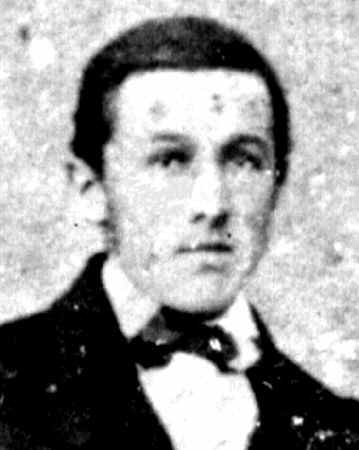
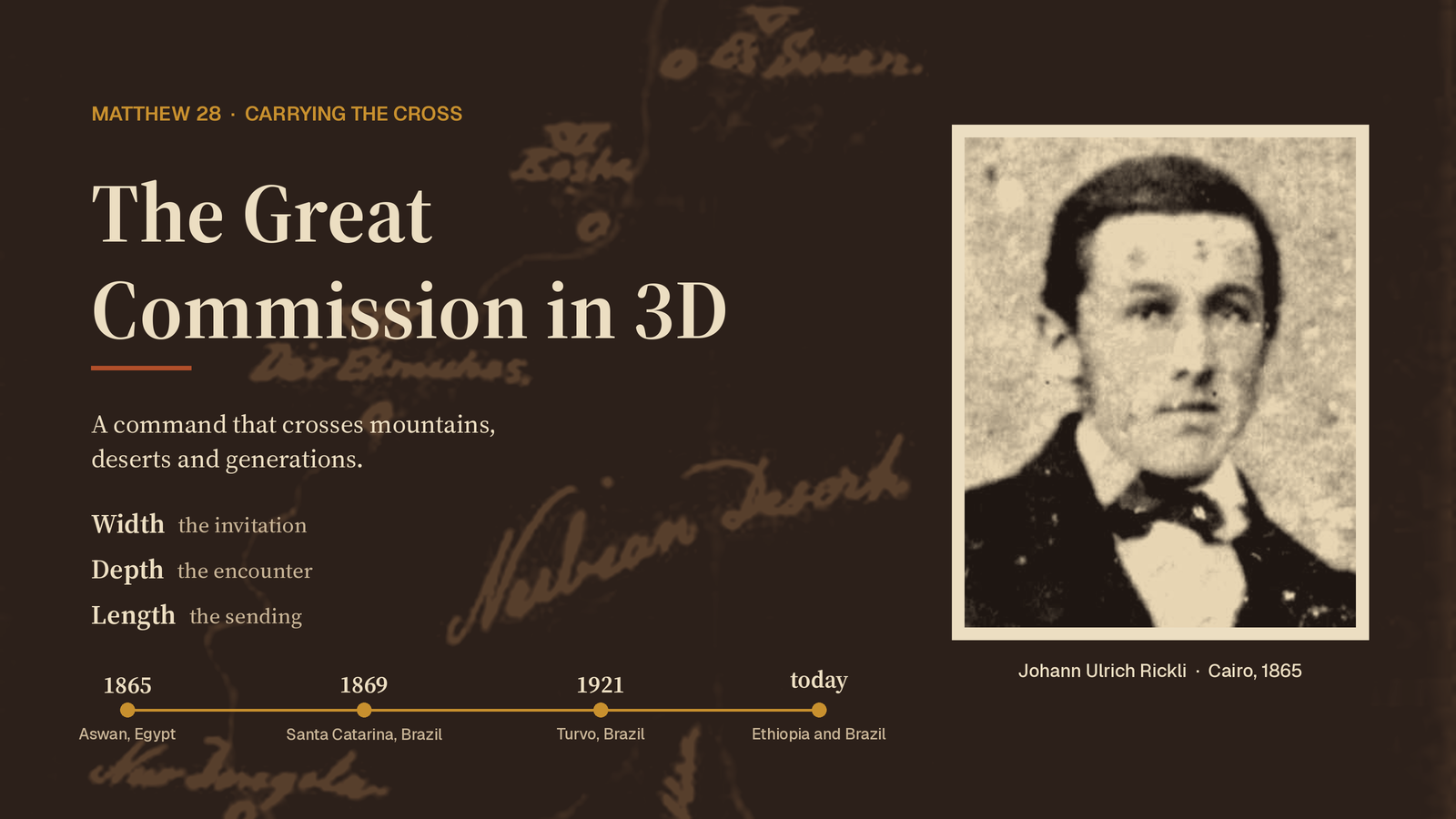
In February 1865, a young Swiss teacher named Johann Ulrich Rickli set sail for Egypt. He was almost 28 and had trained at the Pilgrim Mission in St. Chrischona, near Basel, a school that prepared teachers and craftsmen to turn their own trade into a mission. With three other missionaries, he was sent to found the Apostle Peter station in Aswan, one of the twelve stops on what was called the Apostles’ Road. The project was Johann Ludwig Krapf’s, who dreamed of a chain of mission stations linking Egypt to Ethiopia to reach the Oromo people. Among Johann Ulrich’s books was a rare copy of the Gospel of Matthew translated into the Oromo language.
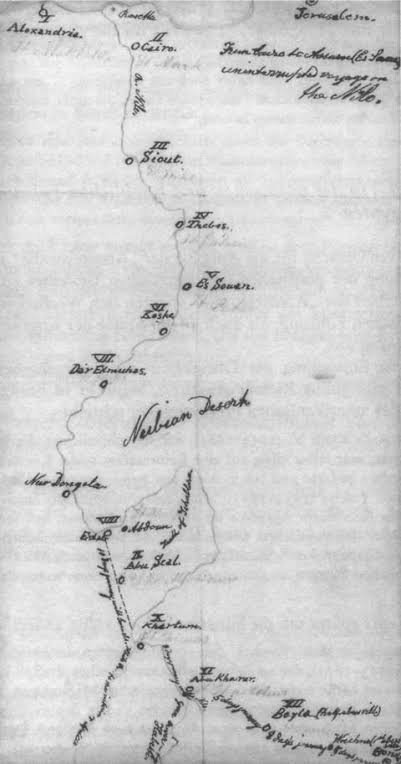
The project did not survive. The missionaries fell ill, and in 1867 and 1868 the Ethiopian emperor had every foreigner in the country imprisoned. The Pilgrim Mission abandoned the Apostles’ Road, and Johann Ulrich never reached Ethiopia. On October 21, 1869, he landed in São Francisco do Sul, in Santa Catarina, Brazil, and lived the rest of his life as a teacher and missionary in southern Brazil, until he died in Turvo, Paraná, in 1921. Today there are more than a thousand Brazilians with the surname Rickli, and I am one of them, fifth generation.
A few years ago I was in Ethiopia to sign a partnership with the Ethiopian Evangelical Church Mekane Yesus, with the goal of reaching the Afar, a nomadic people of the Horn of Africa. At a meeting with pastors, I told the story of my ancestor, and one of them began to cry. Afterward he came to me with his phone in his hand. He had researched the history of the Lutheran movement in the region during his graduate studies and had photos of Johann Ulrich. He hugged me and said: “Your ancestor came to sow what we are harvesting today.” The Mekane Yesus, by the church’s own numbers, now has more than 11 million members, and Ethiopia has gone from mission field to mission force. Johann Ulrich saw none of it. Like Abraham, he simply obeyed, and the God of Abraham, Isaac and Jacob took care of the generations that followed.
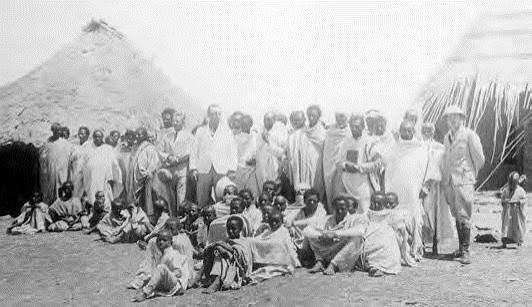
We serve a multigenerational God. The seeds you sow today may be harvested by generations you will never meet.
I don’t know which of these dimensions you are in right now. Maybe you are in the width, hearing the invitation: leave your comfort, come out from behind closed doors, come meet Jesus on the mountain. Maybe you are in the depth, surrendered at his feet, between worship and hesitation, not yet sure what your calling is. Or maybe you are already in the length, on the journey, praying for his Kingdom to be established on earth.
I make an appeal, and you are a response. Your response is a stand. Your response is a posture. Your response is the beginning of something new in your life, starting today.
Because today is the day of salvation. And he is with us always, to the very end of the age.
Watch the full message (in Portuguese)
Preached at a celebration service at ICC Foz, Foz do Iguaçu, Brazil, November 15, 2026.