
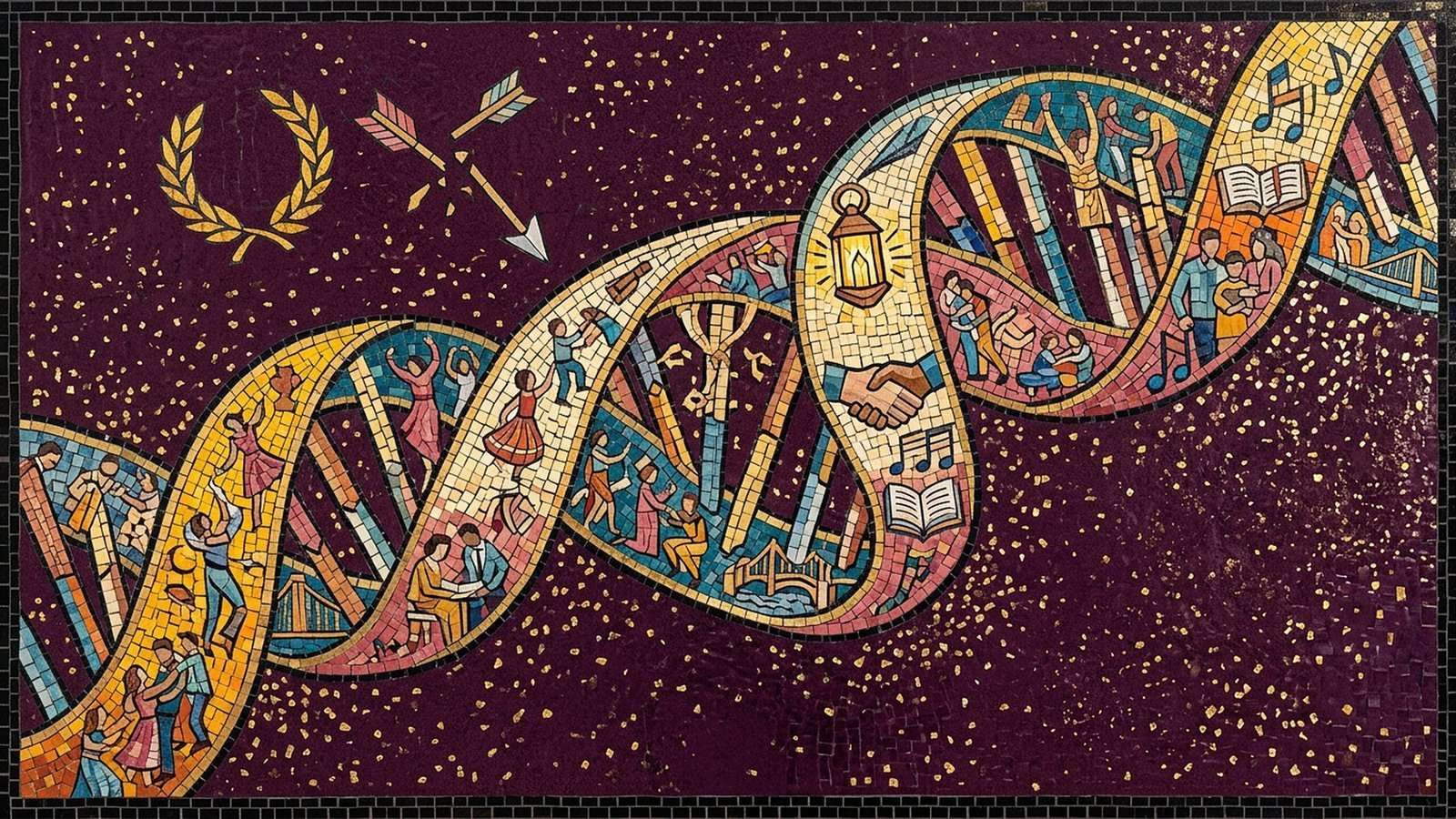
Every organization carries within it a culture — a living, breathing reality deeply rooted in human experience and identity. In Reframing Organizations, Lee Bolman and Terrence Deal describe two primary “frames” that shape and sustain organizational culture: the political and the symbolic.
The political frame extends beyond formal governance. It encompasses how individuals engage across levels of hierarchy, navigate power structures, and negotiate influence. The symbolic frame, on the other hand, shows how stories of triumph and failure form the mythology of an organization. These stories provide meaning, shape behavior, and anchor values, becoming cultural touchstones for those within the system.

Bolman and Deal argue that organizations both have and are cultures. They are like living colonies — ecosystems that generate their own sense of order, purpose, and meaning. In this light, culture is both a product and a process. As a product, it embodies the accumulated wisdom of shared experience. As a process, it is continuously renewed as newcomers absorb inherited norms and, over time, become cultural architects themselves. Product and process form the double helix of an organization’s cultural DNA.
Organizational culture reveals itself in how a system structures its internal and external politics, aligns its core competencies, and interprets its environment. A robust cultural lens reveals not only how teams function or hierarchies are designed, but also how power, conflict, and coalition are negotiated. At its heart, culture is shaped by narrative — the stories we tell that inform action and assign value. These cultural narratives, as scholars like Edgar Schein and Mary Jo Hatch have emphasized, are central to shaping an organization’s adaptive capacity and competitive edge.
This framework holds profound implications for Christian leadership. I once served as pastor of an evangelical church in Greece — a country where roughly 98% of the population identifies with the Greek Orthodox Church. Within this context, evangelicalism and Orthodoxy often represent conflicting cultural realities. Greek Orthodoxy, shaped by two millennia of theological tradition, finds its identity primarily in product — in inherited truth and the preservation of sacred continuity. The very word “Orthodoxy” means “right belief.” In that ecosystem, culture is largely fixed, not fluid. There is little room for innovation or contextual ecclesiology.
Evangelicalism, by contrast, tends to prioritize process — it is dynamic, adaptive, and contextually responsive. Its identity is contemporary, missional, and shaped by the ongoing application of faith in the present moment. While Orthodoxy emphasizes the finality of belief, evangelicalism emphasizes the ongoing discernment of practice. This tension creates a polarized dynamic. Yet, when seen through the lens of culture as both product and process, a missional synthesis becomes possible. We can hold the thesis of evangelical innovation together with the antithesis of Orthodox tradition — and cultivate a missional synthesis that honors both.
Ecclesial culture is a network of meaning that requires both roots and wings — both the depth of tradition and the agility of innovation. In my experience, contemporary churches often strive so hard for relevance that they forget their memory. We neglect the importance of place, story, and liturgical imagination. Meanwhile, Orthodoxy is rich in metaphor, ritual, and symbolic language that carries deep theological resonance.
A missional synthesis can emerge when we re-integrate these narratives into evangelical practice. Consider the story of Cyril and Methodius, two missionary brothers credited with bringing the gospel to the Slavic peoples. Cyril, notably, invented the Cyrillic alphabet — a linguistic tool that allowed the Scriptures to be translated and the gospel contextualized. His innovation wasn’t a departure from tradition, but an embodiment of it. Reintroducing stories like these within evangelical settings can generate a culturally intelligent church — one that weaves together memory and mission, symbol and structure, product and process.
In doing so, we form not just organizations with culture, but communities that are culture — vessels of meaning shaped by the Spirit, rooted in tradition, and animated by mission.