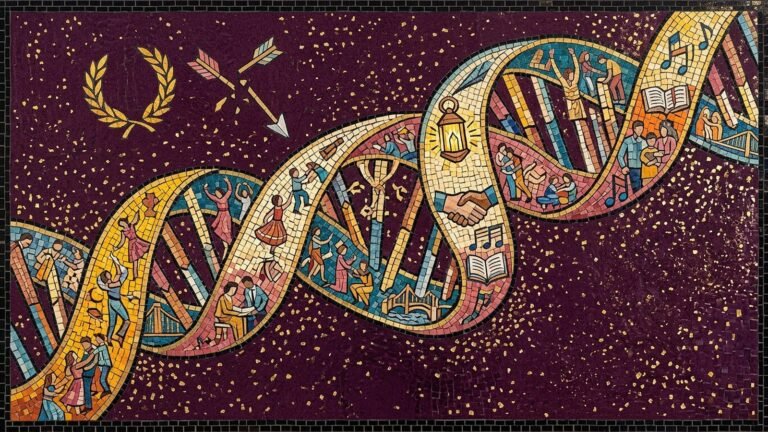

Every organization has a culture deeply rooted in human experience and the human condition. In Reframing Organizations, Lee Bolman and Terrence Deal describe two frames that build and reinforce organizational culture. The first is the political frame. It is not only about governance, but about how individuals are encouraged to interact across the different levels of the organizational hierarchy. The second is the symbolic frame. Here we see how stories of victory and defeat shape the operating culture. These stories feed the mythology of an organization, serving as examples for those who are present.
Bolman and Deal suggest that organizations both have and are cultures. Organizations are like living colonies, forming their own sense of order, value, and purpose. In this way, culture becomes both a product and a process. As a product, it carries the wisdom gathered through experience. As a process, it is renewed and recreated as new members learn the old ways and become models for the rest. Product and process form the double helix of the genetic identity of every organization.
Organizational culture operates through the way it organizes its internal and external politics together with its core competencies. A cultural understanding of an organization tells us how it is structured, how people relate interpersonally and in group dynamics, and how it operates as a political arena with issues of power, conflict, and coalition. In many ways, cultural understanding is the result of the narratives that dictate action and value, which give an advantage in market competition. It is the integration of cultural product and process that serves as the organizational foundation.
Viewing organizational culture as product and process has implications for every Christian leader. For example, I pastor an evangelical church in Greece, a country where 98 percent of the population is Orthodox. Evangelicalism and Orthodoxy form a dialectical, discordant reality. Greek Orthodoxy is the result of two millennia of traditions and beliefs. The word “Orthodoxy” itself means “right belief.” In Orthodoxy there is no room for culture as process. Ecclesial identity rests on the product of wisdom accumulated through experience. There is no place for innovative ecclesiologies, or new ways of “being church.” The evangelical reality, on the other hand, is highly innovative and contextual. It goes through the constant process of renewal and adaptation. Its identity is contemporary and relevant. Where the first focuses on the finished product of belief, the second focuses on the process of applying faith to today. Unfortunately, this reality creates a dynamic of opposites. But using the idea of culture as product and process, one can take the thesis of evangelical missionary innovation together with the dogmatic Orthodox antithesis and form a missional synthesis.
Church culture is a web of meanings that needs both product and process. In my view, the contemporary church often tries to be so relevant that it forgets its memories. We place little value on the sense of place, history, and tradition. Orthodoxy is rich in metaphors, traditions, customs, and other important ways of communicating meaning. A missional synthesis can reemerge in the retelling of such stories in my own evangelical church. For example, I can retell the story of Cyril and Methodius, two missionary brothers who were chiefly responsible for bringing the Gospel to the Slavic world. They were great innovators. Cyril is the inventor of the Cyrillic alphabet, which was used to communicate the gospel to the Slavs and is the basis of many languages in Eastern Europe today. The simple retelling of Orthodox stories within the evangelical reality helps create a synthesis interwoven by tradition and innovation.