The way of the cross carries tremendous significance for every segment of Christianity. The Catholic tradition, for example, venerates this path, which is often called the Via Dolorosa. To this day, Catholics from around the world visit the old city of Jerusalem to walk in the footsteps of Christ. The Reformed tradition, the Anabaptist, and consequently today’s evangelical movement, tend to assign significance not to the act of pilgrimage, but to the biblical narrative and the historical fact.
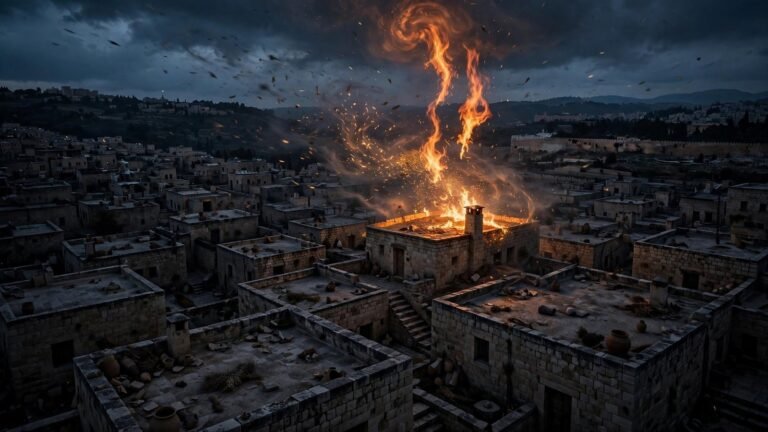
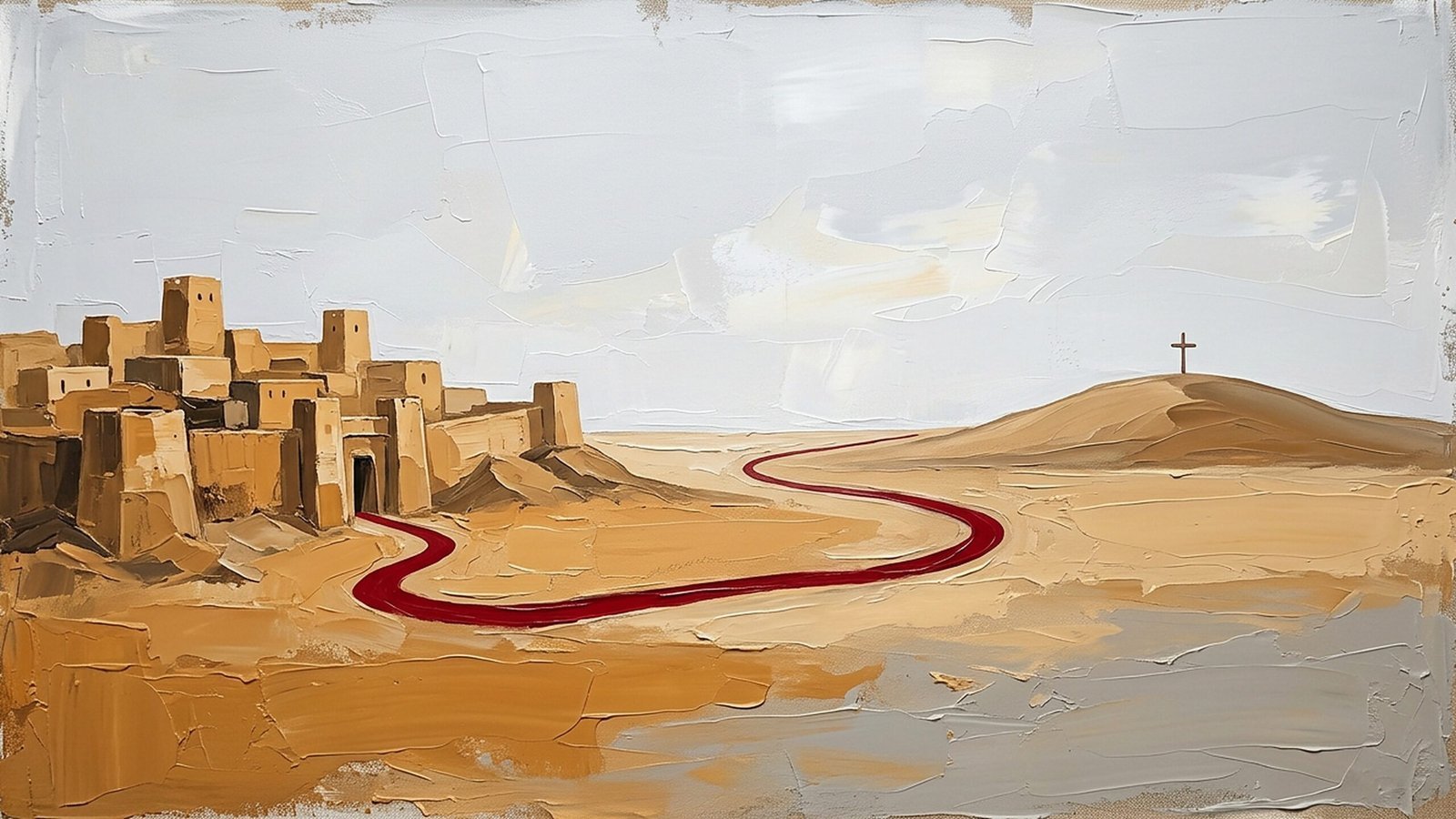
There is much speculation about exactly which road Christ walked. Both the Catholic and Orthodox traditions maintain that Christ was crucified and buried at the site where the Church of the Holy Sepulchre now stands in Jerusalem. The Reformed and evangelical traditions find no historical or archaeological basis for these claims, and believe the most likely site is the Garden Tomb, which sits outside the city gates as the Gospels narrate. Regardless of tradition, scholars believe this path was about one kilometer long.
On the way of the cross there is a profound spiritual truth that goes beyond historical facts, archaeology, pilgrimages, or venerations. For Christ, the road to Golgotha resulted in his death and consequent resurrection. But for us, symbolically speaking, the last kilometer toward Golgotha is the road that takes us out of the city’s tumult and noise, to a secluded place. This road takes us to a place of deep reflection, a place of death to self and crucifixion of the ego, or, as the original meaning indicates, a Place of the Skull.
It is on the road to Golgotha that we meet a man named Simon. Matthew 27:32 tells us he was from Cyrene, a city in North Africa. It is very likely that Simon was an African Jew and was in Jerusalem for the Passover and Pentecost feasts. The scene then explains that Simon was coming from the countryside toward the city, probably in the joyful, relaxed rhythm of the festival, together with his two sons Alexander and Rufus. Suddenly, Simon finds himself in a complicated situation. He crosses the path of Jesus, who was carrying his cross toward Golgotha.
At that time, the Roman Empire had a law that compelled citizens of the imperial provinces to carry anything the Roman army ordered for one Roman mile. Citizens were required to carry weapons and other supplies when the troops moved. So by legal obligation, Simon was forced to carry the cross of Jesus, Jesus being a prisoner of the empire about to be executed. From that moment, the life of Simon of Cyrene was never the same.
This account teaches us a principle. Even today, when we cross the path of Jesus, we are compelled by his Word, the Law of the Spirit, to take an attitude similar to Simon of Cyrene’s. Remember that the entire city of Jerusalem was in uproar because of the Passover and the crucifixion of Christ. His condemnation had become a public episode, and because of the Passover feast, the citizens of Jerusalem had chosen Barabbas. In carrying the cross, Simon identified himself with the condemned Jesus. More than that, for the Jews, Simon identified himself with the blasphemer who claimed to be the Son of God. Simon identified himself with Christ in his shame, weakness, and apparent defeat. At this moment even Christ’s own disciples had abandoned him, since they did not want to receive the same persecution. On the way of the cross, Christ was exposed to humiliation by the world and by religion. Both attacked, insulted, spat upon, and shamed the supposed Messiah. Simon was there, feeling the humiliation in his own flesh, feeling on his skin the remnants of spit, the weight of the stones and the insults hurled. Simon was forced to identify with the shame of Christ. The shame of when God seemed false or too weak to defend himself.
This is Simon’s lesson on the last kilometer toward Golgotha. Simon identifies with Christ when the world and religion condemn him as false and powerless. How many of us are shamed today for being Christians? Under Roman law, Simon could not simply drop the cross and walk away from Christ. But how many of us today are quick to flee from shame to spare our own image? How far are we willing to carry the cross and identify with Christ under the eyes of the world? We see that at no moment did Christ defend himself, for persecution was God’s tool for the fulfillment of his mission. In the same way, Christ does not promise us that we will not face persecution. What God promises is resurrection, a new life in the power of his Spirit. This resurrection is only attained if we identify with the crucified Christ, according to Simon’s lesson.